 Wildlife
of Malaysia
Sources & photo credits
Where the species list and photos come from.
About this guide
A growing, species-first field guide to the wildlife of Peninsular Malaysia: mammals, birds, reptiles and amphibians. Sabah and Sarawak are covered by our sister site, Wildlife of Borneo. This edition lists about 1,200 species, about 750 of them with photographs.
How the species list was built
Each group comes from an open reference list, checked against GBIF records for Peninsular Malaysia (Malaysia minus Sabah, Sarawak and Labuan; retrieved September 2026):
- Mammals: species the Mammal Diversity Database lists for Malaysia, kept only where GBIF has records from the peninsula.
- Birds: IOC World Bird List species with records in Peninsular Malaysia.
- Reptiles: species whose Reptile Database range includes Malaysia, kept only where GBIF has records from the peninsula.
- Amphibians: species with GBIF records in Peninsular Malaysia.
Species known only from a handful of GBIF records are held back until they have been checked by hand. Bornean species that turn up in the peninsular records (usually because a record has no coordinates) were left out. Domestic animals, fossils and zoo records were left out. Common names follow the same lists, then the other Wildlife of Everywhere guides, then Wikipedia article titles (CC BY-SA); where a species has no English name, its scientific name is shown.
"Found only in Malaysia" is based on the range given in those lists and has not yet been assessed for amphibians or reptiles.
Why there is no conservation status
We could not find a current, usable national Red List for Malaysia's vertebrates, and this guide does not substitute global IUCN categories for a national assessment. So no status label is shown. Many species here are protected under Peninsular Malaysia's Wildlife Conservation Act 2010 regardless.
Reference sources
- Mammal Diversity Database: mammal taxonomy and country ranges (CC BY 4.0)
- IOC World Bird List: bird names and taxonomy
- AviList: The Global Avian Checklist © 2026 by the AviList Core Team, licensed under CC BY 4.0: used to check current bird names and to note where it treats a species as a subspecies of another
- The Reptile Database: reptile taxonomy and distribution (via Catalogue of Life, CC BY 4.0)
- GBIF · Malaysia: occurrence records used to check the lists
- PERHILITAN (Department of Wildlife and National Parks): protected areas and wildlife law
mammalwatching.com

Mammal Watching (mammalwatching.com) is a community website for people who watch wild mammals, founded in 2005 by Jon Hall. It brings together trip reports, a directory of sites and guides, a forum, a global mammal checklist, a library of mammal sound recordings and gear advice. Its trip reports are a useful companion when planning where to look for a particular species.
The site includes many examples of how responsible mammal-watching tourism brings income to places with few other sources, giving local people a reason to protect wildlife. These include Brazil's Pantanal, where ranchers now earn more from jaguar tourism than from cattle, and visits that have helped fund research on mandrills in Gabon and spectacled bears in Ecuador. Sightings recorded by mammalwatchers have also documented range extensions, new country records and rediscoveries of "lost" species.
Trip reports
Field trip reports by Jon Hall of mammalwatching.com, with his photographs, reproduced in full. Photos by other people are credited to them and to mammalwatching.com.
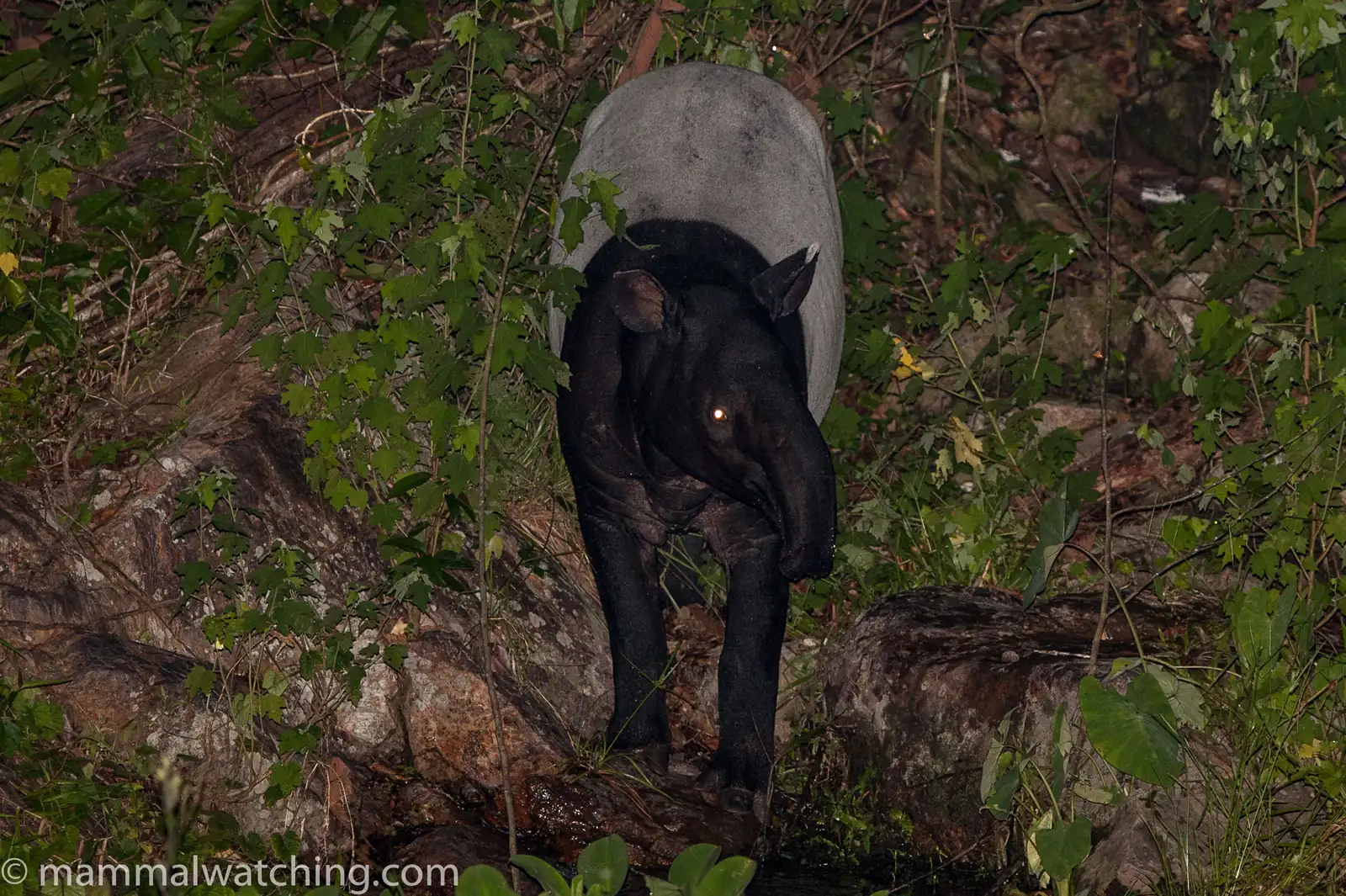 Trip report · Jon Hall · 2010Taman Negara in 2010: finding a Malayan Tapir from the Kumbang hideIn 2010 Jon Hall spent a weekend in Taman Negara to try again for the Malayan Tapir he had missed in 2004. He travelled by bus and taxi from Kuala Lumpur, booked the Kumbang hide in advance and sat up two nights, and was rewarded with a male tapir at the salt lick for over half an hour. The report covers the quick route from Kuala Lumpur, the hide booking and what else turned up.
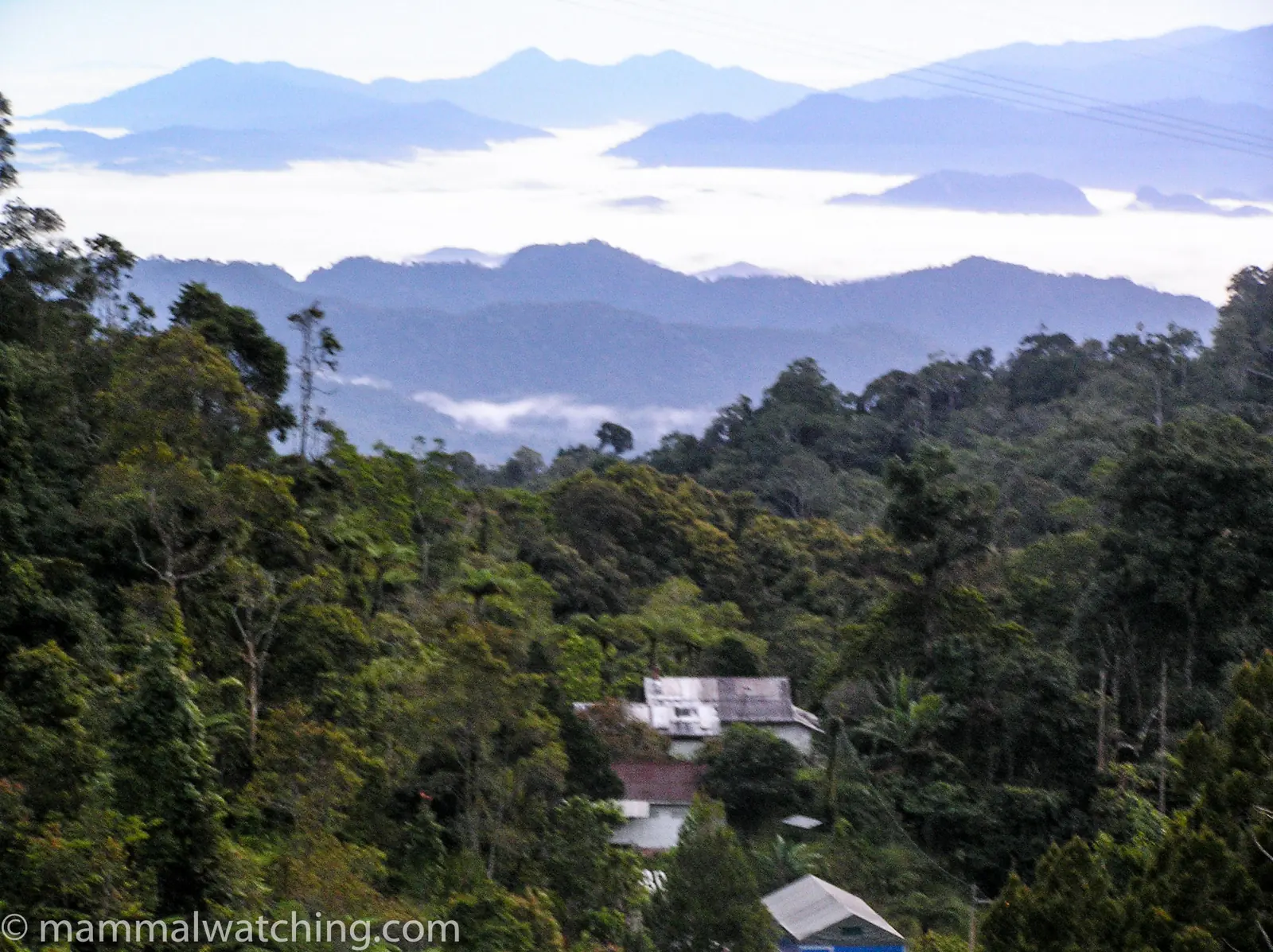 Trip report · Jon Hall · 2004Peninsular Malaysia in 2004: Taman Negara, Bukit Fraser and Bukit Larut, a mammal-watching trip reportIn September 2004 Jon Hall spent time in Peninsular Malaysia during the early rainy season, hoping above all for a Malayan Tapir. He watched from the Kumbang hide in Taman Negara, visited the Gua Telinga bat cave, found Siamang at Bukit Fraser, spotlit civets and a gliding colugo, and saw Selangor Silvery Langurs at Kuala Selangor. The tapir did not show, but the report is full of practical notes on where and when to look.
Planning a visit
Park entry rules, safari bookings, fees and seasonal closures (some parks and trails close during the north-east monsoon, roughly November to February) change often and differ from state to state. Check with the park's own booking site or your operator before you travel rather than relying on the details here.
Wildlife sightings are never guaranteed. The species listed for each place are what is realistically possible there, not what you should expect on a given day.
Your plans and sightings
Your trip plan and sightings are saved in this browser, on this device only. We never see them. Clearing your browser data will clear them too, so download the PDF if you want a copy to keep. Email buttons open a draft in your mail app; nothing is sent until you send it.
Species descriptions
Species accounts are our own paraphrased summaries of published, openly accessible sources, mainly Wikipedia species accounts, and for snakes and other reptiles also The Reptile Database (reptile-database.reptarium.cz), with national checklists and Red Lists where cited. Each account names its source in brackets. Some are general to the species and are not specific to this country; a short entry means the sources said little, not that we left something out. We use no IUCN Red List data.
Photo credits
Most photographs come from iNaturalist and Wikimedia Commons under CC0, CC BY or CC BY-SA licences; the rest were taken by the Wildlife of Everywhere team or are used with the photographer's permission. Each one keeps its photographer's name, licence and a link to the original.
Photographs are chosen to show the species clearly, so many were taken elsewhere in its range rather than in Malaysia. Tap the i on any photograph to see who took it. The full list is below.