 Wildlife
of Malaysia
White-rumped Shama
Thrushes, Chats & Flycatchers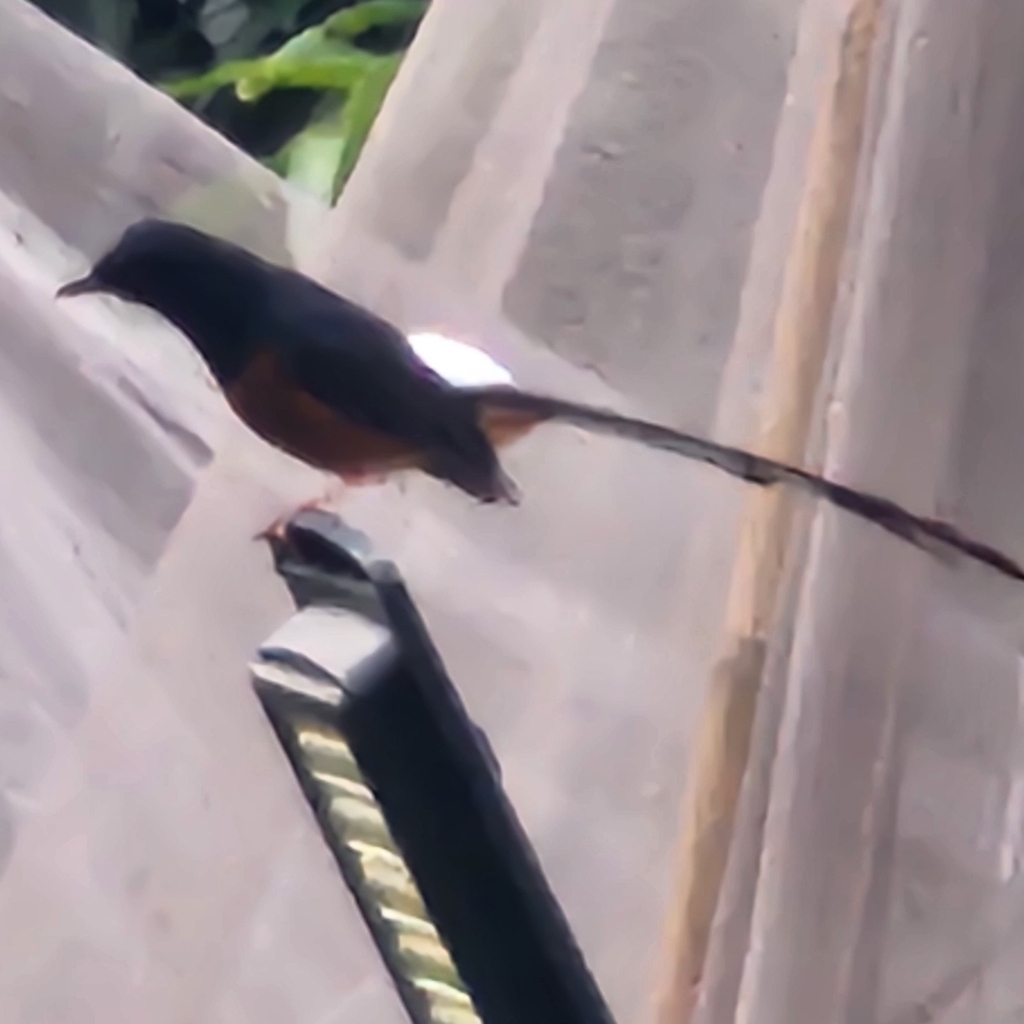
Photo: Lehmann (iNaturalist) · CC BY 4.0 (May be cropped or resized)
Copsychus malabaricus
Basic stats
Diet
Invertebrates
Habitat
Densely vegetated habitats; nests in a tree hollow
Range
Indian subcontinent and Southeast Asia; introduced elsewhere
Clutch size
4–5 eggs
Size
23–28cm
Weight
28–34g
The white-rumped shama is a passerine of the Old World flycatcher family, native to densely vegetated habitats in the Indian subcontinent and Southeast Asia, and introduced elsewhere because of its popularity as a cage bird and songster. Typically 23–28 cm long and 28–34 g, males are glossy black with a chestnut belly and white feathers on the rump and outer tail; females are more greyish-brown and typically shorter, and both sexes have a black bill and pink feet. The Larwo, Kangean and Sri Lanka shamas were formerly considered conspecific (Wikipedia, general species account).
It is shy and somewhat crepuscular but very territorial; territories include a male and female in the breeding season. During courtship, males pursue the female, alight above her, give a shrill call, then flick and fan out their tail feathers. It lays four or five eggs in a tree hollow; both adults feed the young though only the female incubates and broods (Wikipedia, general species account).
Quick answers
- What does the White-rumped Shama eat?
- Invertebrates
- What habitat does the White-rumped Shama live in?
- Densely vegetated habitats; nests in a tree hollow
- Where is the White-rumped Shama found?
- Indian subcontinent and Southeast Asia; introduced elsewhere
- How many eggs does the White-rumped Shama lay?
- 4–5 eggs
- How big is the White-rumped Shama?
- 23–28cm
- How much does the White-rumped Shama weigh?
- 28–34g