 Wildlife
of Malaysia
Slaty-backed Forktail
Thrushes, Chats & Flycatchers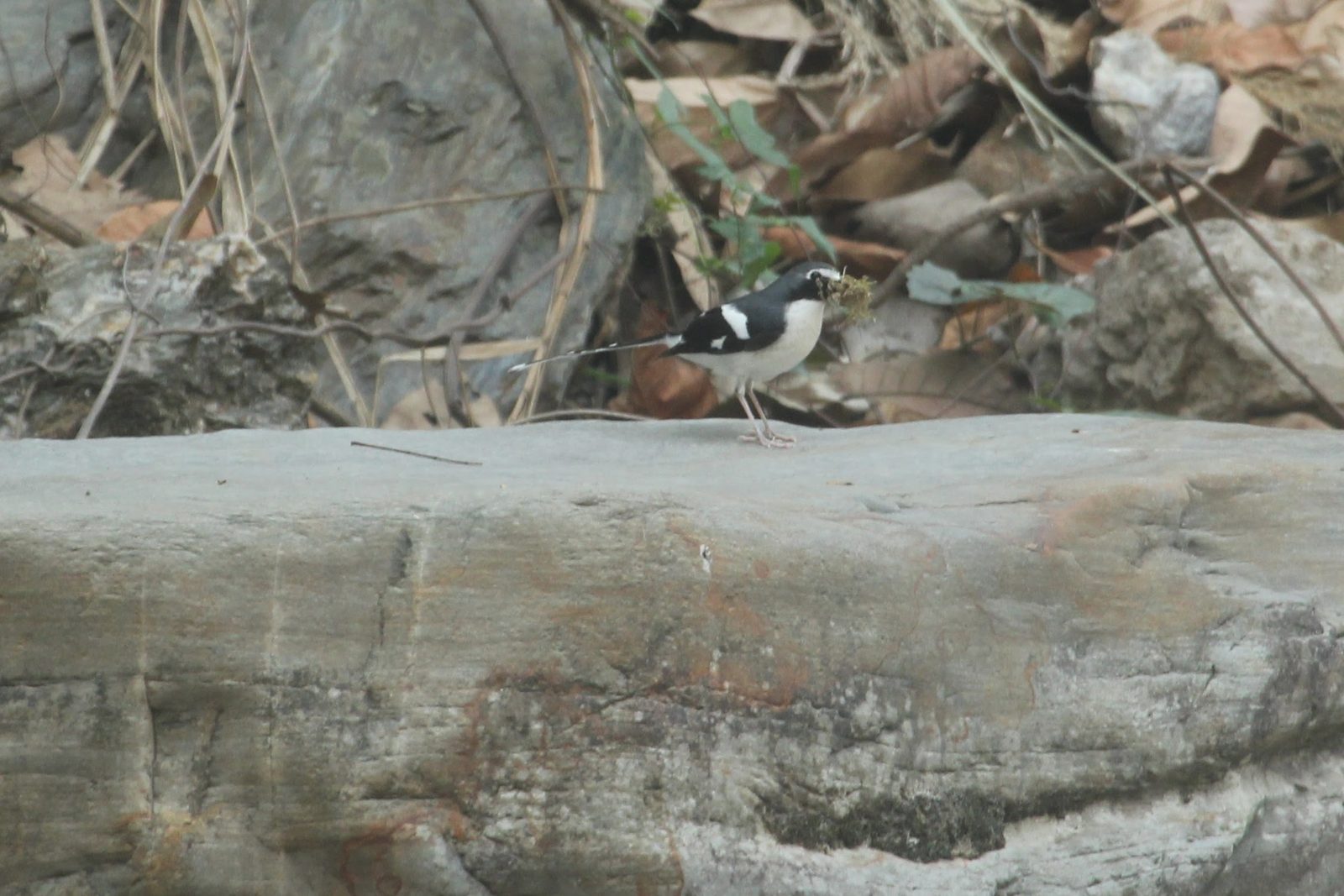
Photo: (c) Barry Stewart, some rights reserved (CC BY) · CC-BY (May be cropped or resized)
Enicurus schistaceus
Basic stats
Diet
Small invertebrates, hunted by hopping among rocks or flying out over the water
Habitat
Edges of fast-flowing streams and rivers
Range
Central and eastern Himalaya, Indian subcontinent, southern China and continental Southeast Asia
Clutch size
3–4 pinkish, bluish or white eggs, incubated by both sexes
The slaty-backed forktail is a slim, medium-sized forktail distinguished from similar species by its slate-grey forehead, crown and mantle. It has a long, deeply forked tail banded black and white, a white rump and a white bar across the primaries, with the rest of the plumage predominantly white; the sexes look alike. It is found in the central and eastern Himalaya, the Indian subcontinent, southern China and continental Southeast Asia; in Southeast Asia it is sedentary, while in the Himalaya it moves over an elevational gradient (Wikipedia, general species account).
It frequents the edges of fast-flowing streams and rivers, hunting small invertebrates by hopping among rocks or flying out over the water. It is generally solitary, occasionally in pairs or in family groups in the breeding season, which runs from February to July, with three or four pinkish, bluish or white eggs incubated by both sexes (Wikipedia, general species account).
Quick answers
- What does the Slaty-backed Forktail eat?
- Small invertebrates, hunted by hopping among rocks or flying out over the water
- What habitat does the Slaty-backed Forktail live in?
- Edges of fast-flowing streams and rivers
- Where is the Slaty-backed Forktail found?
- Central and eastern Himalaya, Indian subcontinent, southern China and continental Southeast Asia
- How many eggs does the Slaty-backed Forktail lay?
- 3–4 pinkish, bluish or white eggs, incubated by both sexes