 Wildlife
of Malaysia
Puff-throated Babbler
Babblers, Laughingthrushes & White-eyes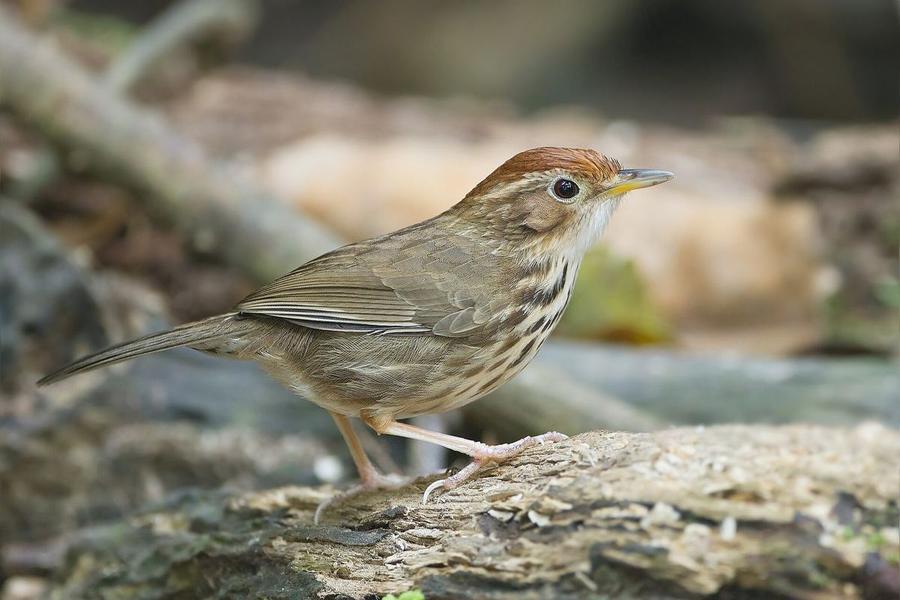
Photo: JJ Harrison (https://www.jjharrison.com.au/) · CC BY-SA 3.0 (May be cropped or resized)
Pellorneum ruficeps
Basic stats
Diet
Insects, found in leaf litter on the forest floor
Habitat
Scrub and moist forest, mainly in hilly regions; forages low in the undergrowth in small groups
Range
Asia
Clutch size
2–5 eggs, larger in northern populations
The puff-throated, or spotted, babbler is brown above and white below with heavy brown streaks towards the breast and belly. The throat is white and sometimes puffed out, giving the English name. Some subspecies have streaks on the mantle while others are unstreaked (Wikipedia, general species account).
It is found in scrub and moist forest mainly in hilly regions, foraging in small groups on the forest floor and turning over leaf litter for prey, usually low in the undergrowth and hard to spot, at first glance like a song thrush. Despite this, it has loud and distinct calls, including a morning song and contact and alarm calls. The clutch is two to five eggs, and young fledge and leave the nest about 12 to 13 days after hatching (Wikipedia, general species account).
Quick answers
- What does the Puff-throated Babbler eat?
- Insects, found in leaf litter on the forest floor
- What habitat does the Puff-throated Babbler live in?
- Scrub and moist forest, mainly in hilly regions; forages low in the undergrowth in small groups
- Where is the Puff-throated Babbler found?
- Asia
- How many eggs does the Puff-throated Babbler lay?
- 2–5 eggs, larger in northern populations