 Wildlife
of Malaysia
Eutropis macularia
Skinks & Lacertids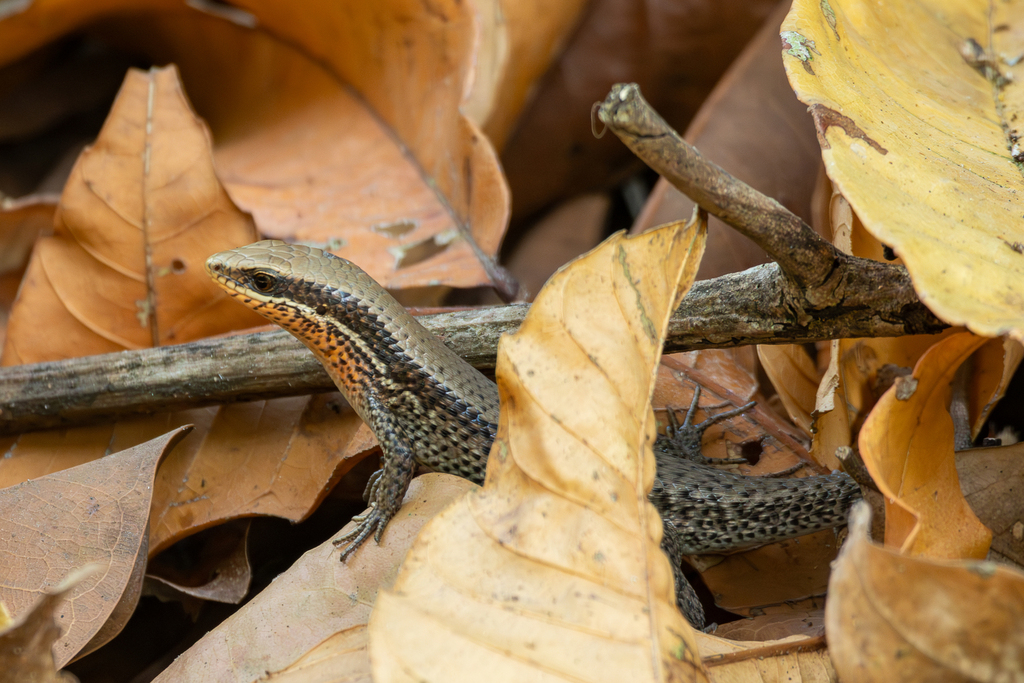
Photo: (c) dhfischer, some rights reserved (CC BY) · CC-BY (May be cropped or resized)
Eutropis macularia
Basic stats
Diet
Insects and other invertebrates
Habitat
Plantations, orchards and gardens; strictly terrestrial
Range
South and South-east Asia
Clutch size
3–6 eggs, several small clutches a year
Size
Up to 23cm
The bronze grass skink, also called the bronze mabuya or speckled forest skink, is a skink of South and South-east Asia. It has a cylindrical body, back scales with 5–8 keels and smooth belly scales, and a pair of bands along the sides running from above the eye to the base of the tail. Juveniles are grey with a bronze head, and breeding males have orange on the sides of the body (Wikipedia, general species account).
It feeds on insects and other invertebrates, and is a common but shy ground-dwelling species active both day and night. Females lay several small clutches of three to six eggs each year, and the maximum length is 23 cm (Wikipedia, general species account).
Quick answers
- What does the Eutropis macularia eat?
- Insects and other invertebrates
- What habitat does the Eutropis macularia live in?
- Plantations, orchards and gardens; strictly terrestrial
- Where is the Eutropis macularia found?
- South and South-east Asia
- How many eggs does the Eutropis macularia lay?
- 3–6 eggs, several small clutches a year
- How big is the Eutropis macularia?
- Up to 23cm